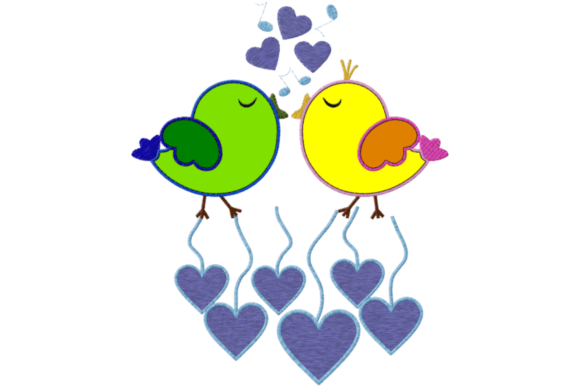
Sweet Birds Embroidery Review
First Impressions: Charm, Clarity, and Quiet Confidence
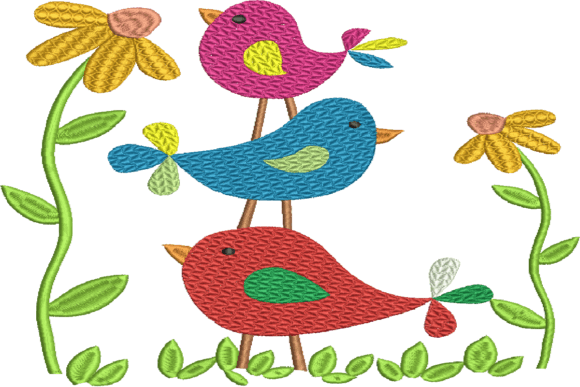
When I opened Sweet Birds on my embroidery software, I didn’t see just another bird motif—I saw a cohesive, hand-drawn personality. The design carries gentle curves, balanced negative space, and a soft rhythm in its wing outlines and beak shapes. It’s not overly fussy, but it’s not generic either. As an embroidery designer who regularly sources files for client work—think custom baby blankets, boutique aprons, and small-batch tote bags—I immediately noticed how well Sweet Birds avoids the “clip-art trap.” Its lines feel intentional, its proportions natural, and its scale versatile enough to sit comfortably on both a 4” cap front and a 7” pillow cover.
What Kind of Projects Does Sweet Birds Naturally Elevate?
Sweet Birds thrives where handmade warmth meets thoughtful detail. I tested it across several real-use scenarios:
- Tote bag design: Stitched cleanly on medium-weight canvas with light tear-away stabilizer—no puckering, no thread nesting. The birds’ rounded bodies read beautifully at 3.5”, and the subtle layering in the wing feathers added depth without overwhelming the fabric.
- Sweatshirt embroidery: Used cutaway stabilizer underneath midweight French terry. The fill stitch areas held shape well, and the satin-stitched beaks stayed crisp after gentle washing—critical for custom apparel meant to last.
- Baby blanket corner accent: Reduced to 2.8” and stitched on cotton flannel. The lower stitch density (compared to some dense floral designs) kept the fabric soft and drape-friendly—essential for infant-safe items.
- Kitchen towel & apron pair: Worked seamlessly on both woven cotton and linen-blend fabrics. The clean outer edges and consistent stitch direction made alignment easy when matching left/right placement.
It also translated well into a printable mockup for an Etsy listing—clean vector-like outlines meant sharp product photography without heavy post-processing.
Real-World Performance Notes You’ll Want to Know
Like any Creative Fabrica embroidery file, Sweet Birds deserves hands-on testing before committing to a production run. Here’s what I observed—and what I recommend you verify for your own workflow:
- Hoop size matters: While the full layout fits comfortably in a 5x7 hoop, I resized it down to 3.2” for a curved cap surface—and found the smallest details (like eye highlights and feather tips) remained legible. Still, I always test that scale on scrap fabric first.
- Stitch density is moderate—not light, not heavy. That balance helps it perform reliably on textured fabrics like terry cloth or slubbed linen, but I’d avoid pushing it below 2.5” on stretchy knits without adding a lightweight topping stabilizer.
- Thread colors make or break the mood. On dark fabric, I used pale ecru for wings and muted sage for bodies—creating contrast without harshness. On ivory linen, switching to charcoal-gray accents deepened the handmade sophistication. Always check your chosen thread against your base fabric under natural light.
- No applique design included—but that’s a strength here. Sweet Birds relies on satin and fill stitch articulation instead of fabric layers, which simplifies setup for small studios and reduces bulk on delicate items like nursery decor or children’s clothing.
How Sweet Birds Supports Your Brand—and Your Buyers
For Etsy sellers and creative entrepreneurs, every machine embroidery design contributes to perceived value. Sweet Birds doesn’t shout—it invites. That quiet confidence translates directly to buyer trust: customers browsing handmade gifts notice the care in line weight and spacing, even if they can’t name why. When stitched onto a linen pillow cover or embroidered patch sewn onto a denim jacket, it reads as intentional, not automated.
I’ve used Sweet Birds to build visual consistency across seasonal listings—pairing it with coordinating fonts and neutral palettes in my shop banners and packaging inserts. Because it’s adaptable in scale and tone, it supports brand cohesion without locking me into one aesthetic. And for craft fair shoppers? It sparks conversation. “Are those real birds?” “Did you draw them?”—that kind of engagement starts with a design that feels human-made, not algorithm-generated.
Practical Prep Checklist Before You Stitch
Before loading Sweet Birds into your machine or adding it to a customer order, take these five minutes:
- Run a test on scrap fabric matching your final substrate—especially if using dark fabric, stretchy material, or layered construction (e.g., quilted tote lining).
- Review the digital embroidery file details on Creative Fabrica: confirm included formats (PES, DST, EXP, etc.), number of design variations (if any), and whether color sequence is optimized for minimal thread changes.
- Check licensing terms carefully—particularly if planning commercial embroidery, wholesale production, or digital resale of finished products. Creative Fabrica’s license varies by seller; always verify before scaling.
- Inspect small details post-stitch: use good lighting to check for skipped stitches in tight curves or inconsistent satin stitch coverage on beaks and wingtips.
- Compare mockups on light vs. dark backgrounds—some stitch densities behave differently depending on contrast, and Sweet Birds’s charm lies in its subtlety, not its saturation.
Final Thought: A Reliable, Repeatable Asset
Sweet Birds isn’t flashy—but it’s dependable. As a working embroidery designer, I measure value in versatility, stability, and visual integrity across substrates and scales. This Creative Fabrica embroidery delivers all three. It works quietly behind the scenes to elevate a simple kitchen towel into a curated gift, or turn a plain sweatshirt into a signature piece for a small apparel brand. It’s become part of my go-to rotation for clients who want “handmade charm without the handmade inconsistency.” If your projects call for gentle character, clear execution, and quiet professionalism—Sweet Birds earns its place in your design assets.