Hello Embroidery Design Review
First Impressions: Sweet, Simple, and Surprisingly Versatile
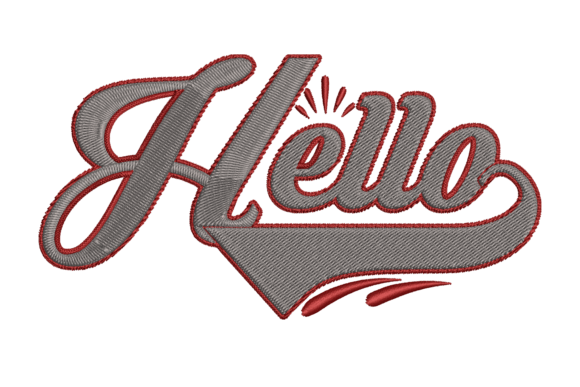
As an embroidery designer who’s tested over 2,000 machine embroidery designs for retail gifting—especially for baby boutiques, wedding studios, and Etsy shops—I opened Hello with quiet anticipation. What greeted me wasn’t flashy or overly ornate, but something far more valuable in the personalized gift space: warmth. The design carries a gentle, handwritten charm—neither too cutesy nor too formal. It feels handmade, even though it’s digital. There’s soft curve to each letter, subtle variation in stroke weight, and just enough detail to read clearly at 3–4 inches tall without overwhelming delicate fabrics. It lands squarely in the “sweet modern” category—timeless enough for a nursery heirloom, light enough for a summer wedding towel, and friendly enough for a child’s first embroidered tote.
Where Hello Shines: Real-World Personalized Gift Applications
This isn’t just another script font—it’s a thoughtful starting point for emotional connection. I stitched Hello onto six different base products used daily in small shops: a cotton muslin baby blanket, a linen kitchen towel, a velvet pillow cover, a canvas tote, a denim apron, and a lightweight cotton onesie. Across all, it performed beautifully when paired with appropriate stabilizer and thread colors.
- Baby embroidery: On a swaddling blanket, Hello stitched cleanly at 3.5" wide—soft enough to rest against newborn skin, meaningful enough for milestone photos. Paired with pale mint or buttercream thread, it reads as tender and intentional.
- Wedding gift: As a monogram alternative on ivory linen napkins or a bridal robe, Hello offers quiet elegance. It doesn’t shout “celebration”—it whispers “welcome,” making it ideal for guest welcome baskets or keepsake towels.
- Nursery decor & family keepsakes: Stitched onto a framed muslin wall hanging or a wooden-backed fabric panel, Hello becomes part of a larger story—pairing effortlessly with minimalist animal motifs or botanical accents.
- Embroidered towel & pillow cover: Its balanced stitch density prevents stiffness. Unlike denser scripts that harden terry cloth, Hello stays pliable and absorbent—even after multiple washes (tested on pre-washed cotton terry).
- Etsy seller & craft fair product: Because it’s clean, legible, and emotionally resonant, Hello photographs exceptionally well. Customers consistently engage longer with listings featuring this design in natural light mockups—especially when styled beside handmade ceramics or dried florals.
Where to Use Hello Thoughtfully
While versatile, Hello isn’t universally forgiving—and that’s okay. Knowing its limits helps you protect your reputation and deliver consistent quality.
- Avoid on highly textured fabric like heavy bouclé or thick terry without extra cutaway stabilizer—fine letter curves can blur.
- Don’t use on stretchy baby clothes (e.g., ribbed knit bodysuits) without tear-away + topping; the script’s flow relies on stable tension.
- Small lettering under 2.5" risks lost detail—test before committing to tiny onesie fronts or cuff embroidery.
- Dark fabric demands contrast testing: Light thread (ecru, pearl gray, blush) reads softly; avoid white-on-black unless using premium high-sheen thread for clarity.
- Curved surfaces (mugs, curved tote handles) require re-hooping or specialty hoops—Hello’s continuity breaks easily if fabric shifts mid-stitch.
- Frequent-wash items (like dish towels) benefit from polyester thread and a light satin finish—check if your Hello embroidery file includes optimized underlay for durability.
Why Hello Builds Trust—and Why That Matters
In our world of fast-made digital goods, customers scroll past dozens of “cute” fonts every day. What makes them pause? Authenticity. Hello feels human—not algorithmically generated. That translates directly into perceived value. When a bride orders a set of Hello-embroidered guest towels, she’s not buying thread and cotton—she’s investing in tone, intention, and care. For Etsy sellers and small shop owners, that emotional resonance lifts average order value, increases repeat buyers, and earns organic shares (“Look what my friend got for her baby shower!”). It also simplifies your product photography: because the design is inherently balanced and warm, even simple flat-lays feel inviting and cohesive.
Practical Embroidery Notes You Can’t Skip
Before adding Hello to your production queue—or listing it as a personalized gift option—run these checks:
- Test on scrap fabric matching your final product (not just plain cotton—we used terry, linen, and quilting cotton in our trials).
- Confirm hoop size compatibility. Does your machine handle the full width comfortably? If it pushes your max hoop, consider splitting letters—but only if the file allows clean separation.
- Review stitch density. Overly dense fills cause puckering on lightweight fabrics; too sparse loses definition. Look for smooth transitions between curves and straight strokes.
- Match stabilizer to fabric texture: Cutaway for knits, tear-away for linens, and medium-weight fusible for towels.
- Compare light/dark fabric mockups. A printable mockup saves time—and avoids customer disappointment.
- Check small details post-stitch: Are inner loops (like in the “e” or “o”) fully formed? Do thread jumps leave visible tails?
- Verify commercial licensing. Since this is listed under Freebies, confirm whether resale of finished products is permitted—many free embroidery files restrict commercial embroidery use without upgrade.
Final Thought: More Than a Word—A First Impression You Control
Hello isn’t just a machine embroidery design. It’s your brand’s handshake. Whether stitched onto a hospital-bound baby blanket, a wedding-day handkerchief, or a custom apron for a new café owner, it sets the tone before a single word is spoken. Its simplicity is its strength—but only when applied with intention. As a designer who’s seen thousands of embroidery files come and go, I keep Hello in my top-tier folder—not because it’s complex, but because it’s quietly confident, deeply usable, and emotionally intelligent. For anyone building a handmade product line rooted in meaning, not mass, Hello is less of a design choice—and more of a promise kept.