Golf Bag Embroidery Design Review
First Impression: Classic, Polished, and Professionally Sporty
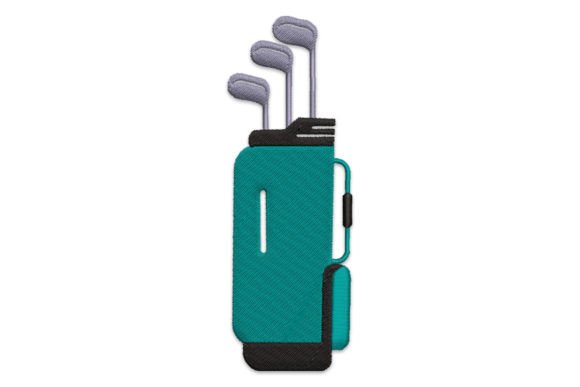
Right off the bat, Golf Bag reads as a refined yet approachable machine embroidery design. The description — “stunning embroidery design showcasing a golf bag with clubs, meticulously crafted with intricate stitches and lifelike textures” — signals strong visual hierarchy and intentional detail. It’s not cartoonish or overly stylized; it leans into classic sports elegance, making it ideal for small business merch that balances authenticity with polish. Think boutique golf resorts, local pro shops, lifestyle brands with athletic flair, or even creative studios hosting “golf & coffee” pop-ups. It feels premium without being stiff — friendly enough for an apron at a craft café, confident enough for a chest logo on staff uniforms.
Real-World Business Use: Where Golf Bag Shines
This design excels across multiple commercial embroidery applications — especially when brand cohesion matters. As an embroidered patch, Golf Bag works beautifully on denim jackets, canvas tote bags, and woven labels for handmade product packaging. Its balanced proportions and clear silhouette translate well to cap embroidery — particularly on structured front panels where the bag’s upright form anchors the layout. On aprons for golf-themed bakeries or florists (yes — “Tee Time Tulips” is a real niche), Golf Bag adds subtle storytelling without overwhelming the garment.
For custom apparel like work shirts or staff polos, Golf Bag serves as a sophisticated chest accent — more distinctive than a generic monogram, more versatile than full-swing action shots. It also scales effectively for tote bag design used in event merch or customer gifts: clean lines hold up at 4–5 inches wide, and the implied texture invites tactile engagement. When paired with minimalist typography or a small tagline (“Est. 2023” or “Hand-Poured • Hand-Stitched”), it reinforces handmade product credibility while staying rooted in the Sports category.
Careful Placement: Know Your Limits
Like any high-detail embroidery file, Golf Bag demands thoughtful execution. Avoid shrinking it below 2.5 inches wide — fine club outlines and stitch-defined textures risk bleeding or merging on small patch sizes. Cap embroidery requires extra attention to curvature: test placement on a real cap blank to ensure the bag’s base doesn’t distort on the front panel’s dome. Curved surfaces like sleeves or tapered tote handles may compress vertical elements unless digitized with gentle contour compensation — confirm this with your digitizer or file provider.
High stitch density — implied by “intricate stitches and lifelike textures” — means stabilizer choice is non-negotiable. Use medium-cutaway or tear-away + topping for textured fabric like twill or canvas. On dark uniforms, verify thread color contrast: light-tone greens, creams, or heathers will lift the design; avoid pale yellows or off-whites that recede. And if your small business merch includes items subject to frequent washing (e.g., staff aprons or reusable totes), reinforce backings and trim jump stitches tightly — durability hinges on clean digitization, not just aesthetics.
Brand Identity Impact: More Than Just a Logo
Golf Bag does quiet but powerful identity work. It communicates expertise (golf is precision-based), calm confidence (no aggressive mascots or loud fonts), and artisanal care (“meticulously crafted” resonates with handmade product buyers). For Etsy sellers or local boutiques, it subtly elevates perceived value — customers associate detailed embroidery with intentionality and quality craftsmanship. Unlike clip-art logos, Golf Bag feels like a design asset built for longevity: it pairs cleanly with serif or clean sans-serif type, fits into seasonal collections (think “Spring Tee Time” or “Winter Greens”), and supports visual consistency across digital and physical touchpoints.
That consistency builds trust. When a customer sees Golf Bag on a cap, then again on a tote, then stitched onto a product label — all with matching thread tones and spacing — it signals professionalism and attention to detail. That’s how small businesses convert first-time buyers into repeat clients. And because it avoids overused tropes (no eagles, no flags, no oversized balls), Golf Bag stands out in crowded markets — whether you’re a pet brand launching “Paw & Putt” collars or a florist offering “Fairway Florals” bouquets.
Practical Designer Notes Before You Stitch
- Test in black and white first — assess contrast, balance, and negative space before committing to thread colors.
- Check small-patch viability — resize to 2.25" and run a virtual stitch simulation or print a 1:1 outline.
- Review thread color contrast — especially on dark or heathered fabrics; consider matte vs. rayon sheen for texture fidelity.
- Inspect spacing and underlay — tight gaps between clubs or bag straps need proper under-stitching to prevent puckering.
- Confirm hoop size compatibility — intricate designs often require larger hoops (e.g., 5x7") for smooth hooping and tension control.
- Test on real fabric — run a sample on your target material (canvas, twill, cotton poplin) with appropriate stabilizer.
- Create a printable mockup — use it for client approval, social media previews, or packaging design alignment.
- Compare beside other design assets — ensure Golf Bag harmonizes with your existing logo, icons, or pattern library.
- Verify commercial licensing — confirm the digital embroidery file permits use on merchandise sold to end customers.
Ultimately, Golf Bag isn’t just a sports-themed embroidery file — it’s a flexible, brand-forward tool for small business owners building recognition through thoughtful detail. Whether you're stitching caps for a local driving range, branding tote bags for a creative studio, or adding embroidered accents to handmade product packaging, this design delivers quiet authority and lasting appeal. Just remember: great embroidery starts with smart prep — not just beautiful files.