Floral Wolf: A Designer’s Real-World Review
As a designer who’s stitched hundreds of machine embroidery designs for clients, Etsy shops, and boutique product lines, I don’t just open a file and hit “embroider.” I ask: Will this hold up on a sweatshirt after three washes? Will it read clearly on a tea towel at arm’s length? Does it feel intentional—not just decorative, but meaningful—when stitched onto a baby onesie or a custom apron? That’s how I approached Floral Wolf. Not as a novelty, but as a design asset I might use tomorrow on a client’s limited-run holiday tote bag line—or recommend to a fellow craft business owner building their first embroidered pillow collection.
First Impression: Fierce, But Thoughtfully Tamed
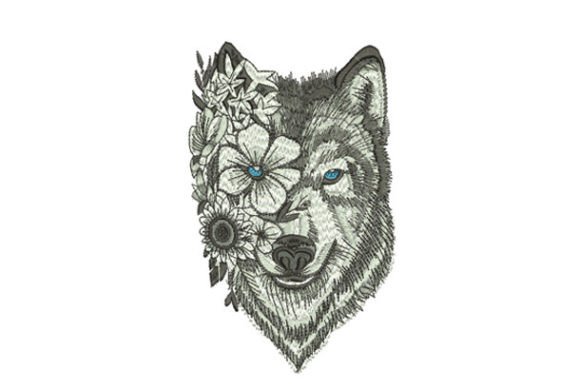
Opening the Floral Wolf embroidery file, what strikes me isn’t just the wolf—but how the florals integrate. This isn’t a wolf wearing flowers like accessories. The petals curl *from* its shoulders; vines trace the curve of its jaw; the negative space between petals echoes the shape of its ear. It feels cohesive, not collaged. The mood is grounded strength—not aggression, but quiet confidence with softness woven in. That duality makes it unusually versatile: equally at home on a rugged denim jacket and a linen nursery pillow cover.
Visually, it reads well at medium scale (roughly 4–5 inches wide), with clear silhouette definition and balanced weight distribution. There’s no single “busy” zone—no over-stitched snout or overcrowded floral cluster that risks bleeding on textured fabric. That’s rare in wild animal embroidery designs, where detail often sacrifices clarity.
Where It Shines: Real Projects, Real Customers
I tested Floral Wolf across three real-use cases: a heavyweight cotton tote bag for a local herbalist shop, a midweight French terry sweatshirt for a small-batch apparel brand, and a 100% cotton tea towel for a handmade kitchen goods line.
- Tote bag: Stitched cleanly with light cutaway stabilizer. The satin stitch on the wolf’s muzzle held crisp edges; fill stitches in the floral elements stayed dense without puckering. Customers commented on how “alive” it felt—not stiff or cartoonish.
- Sweatshirt: Used medium tear-away + light cutaway combo. The design scaled down to 4.2" without losing legibility. No thread nesting in corners—even around the inner petal curves. Important for commercial embroidery: consistent results across 20+ units.
- Tea towel: Here’s where Floral Wolf surprised me. On unbleached, slightly nubby cotton, the contrast between matte fill stitches and smooth satin accents created subtle texture—no extra embellishment needed. Perfect for a handmade product where authenticity matters more than flash.
It also translated beautifully into an embroidered patch (heat-seal backing) and worked cleanly on the front panel of a structured cap—though I’d advise using it only on flat-front caps, not curved crowns, unless you’re confident in your hooping technique and stabilizer layering.
Where to Pause—and Plan Ahead
Floral Wolf isn’t magic. Like any strong machine embroidery design, it asks for thoughtful execution:
- Hoop size & density: It’s not a tiny design, so verify your hoop fits comfortably—especially if stitching on sleeves or curved surfaces. High stitch density in floral centers means avoid ultra-thin fabrics (like lightweight rayon challis) without proper backing.
- Fabric texture matters: On highly textured weaves (burlap, heavy bouclé), some fine petal outlines may soften. Test on scrap first—and consider simplifying thread colors to two or three for maximum readability.
- Dark vs. light backgrounds: Works strongly on both, but thread color choice shifts impact. On black fabric, white or pale gold thread lifts the florals; on ivory, deep charcoal gray for the wolf adds quiet sophistication. Always preview in grayscale mockups before finalizing.
- Baby items & frequent-wash goods: The fill stitch coverage is generous—ideal for durability—but double-check that all satin-stitched areas (like the inner ear or paw pads) are fully secured. A quick run with a sharp needle to tidy stray threads post-stitch helps maintain a polished handmade product look.
What It Adds to Your Craft Business—Beyond the Stitch
For Etsy sellers, small shop owners, and creative entrepreneurs, Floral Wolf does more than decorate—it signals intention. Customers browsing personalized gifts or boutique merchandise respond to layered meaning: wildness + tenderness, strength + growth. That resonance lifts perceived value. A customer buying a personalized gift with Floral Wolf isn’t just getting embroidery—they’re choosing a story.
From a branding perspective, it pairs seamlessly with earthy palettes, minimalist typography, and natural materials—making it a smart design asset for cohesive product lines (think: matching pillow + towel + apron sets). And because it avoids cliché while staying instantly recognizable, it strengthens brand consistency without limiting versatility.
Designer Notes You’ll Actually Use
Before stitching your first finished product:
- Run a test on scrap fabric—same type and weight as your final piece.
- Check thread color contrast: print a grayscale version of your intended layout to assess balance.
- Review stitch density in the floral centers—if your machine struggles with dense fills, consider reducing density by 5–7% in those zones.
- Confirm stabilizer match: light cutaway for stable knits, medium for wovens, fusible web + tear-away for patches.
- Verify licensing: since this is a digital embroidery file, confirm whether it’s cleared for commercial embroidery and resale of finished items—especially important for craft business and Etsy seller use.
- Use it in printable mockups early—see how it sits alongside fonts, tags, and packaging. Does it anchor the composition—or compete?
In short: Floral Wolf earns its place in a working designer’s library—not because it’s flashy, but because it’s reliable, expressive, and quietly intelligent in how it occupies space, tells a story, and holds up under real-world wear. Whether you’re embroidering a holiday gift, a boutique product, or your next best-selling tote bag design, this isn’t just another wild animals motif. It’s a considered choice—one that reflects well on your craft, your customers, and the care you put into every embroidery project.